GBPNZD Long +4.2R
A real trade, documented screen by screen. On 18 June 2026 the Bank of England published its rate decision at midday. The setup had been building for two weeks inside the terminal, across three independent layers: the economy, institutional positioning, and the retail crowd. All three pointed the same way. Here is the full reasoning.
GBP strength was printing across every cross
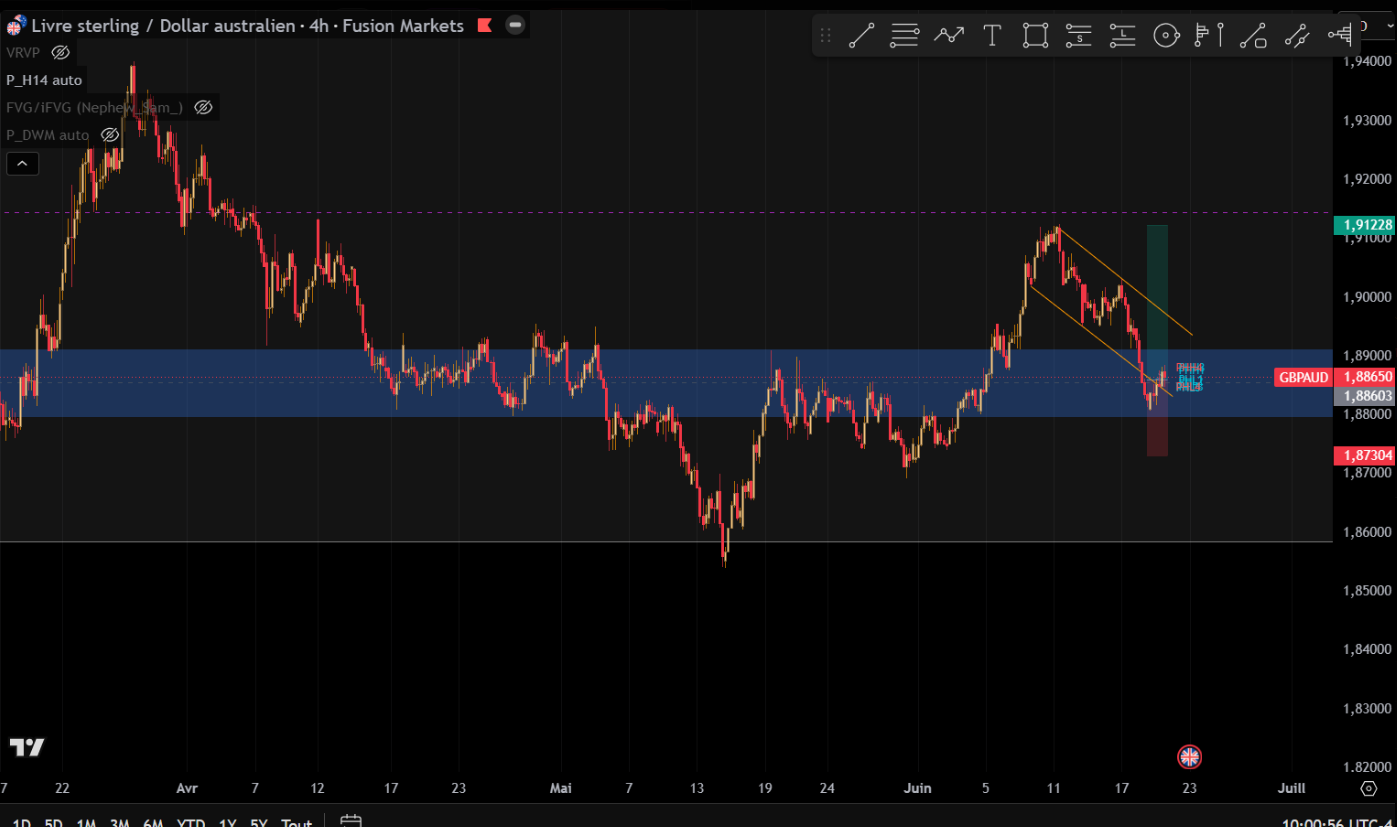
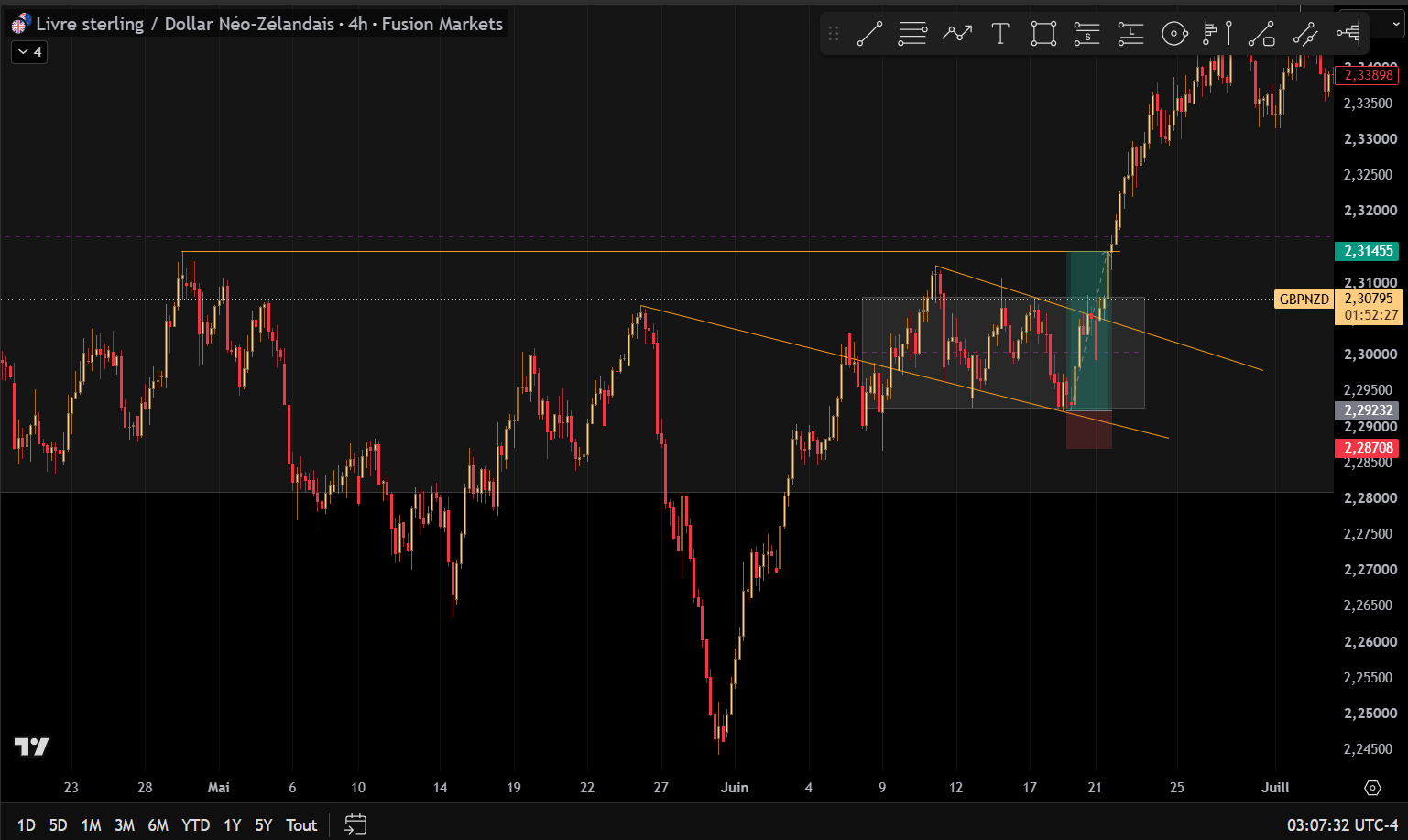
Mid June, sterling was the strongest currency on the board. The same structure kept repeating across GBP crosses: an impulsive leg up, a corrective descending channel drifting back into a demand zone, and buyers stepping in at the level. GBPNZD showed the cleanest version: a multi week consolidation compressing under the March high at 2.3145, with a well defined invalidation below the range.
BoE holding hawkish, RBNZ stuck at the cycle low
The policy gap was the engine of the trade. On 18 June the Bank of England held Bank Rate at 3.75% with a 7 to 2 vote, and the two dissenters voted for a hike to 4%. UK market pricing sloped upward, roughly 30 bps higher by end 2026, with the MPC openly warning that energy driven inflation could force it to act.
On the other side, the RBNZ sat at 2.25%, the low of its cycle after 325 bps of cuts, following a rare 3 to 3 split vote in May. The New Zealand recovery was fragile and markets did not price the first hike before September. That left a 150 bps rate differential in favour of GBP, with the hawkish risk on the GBP side and the dovish inertia on the NZD side.
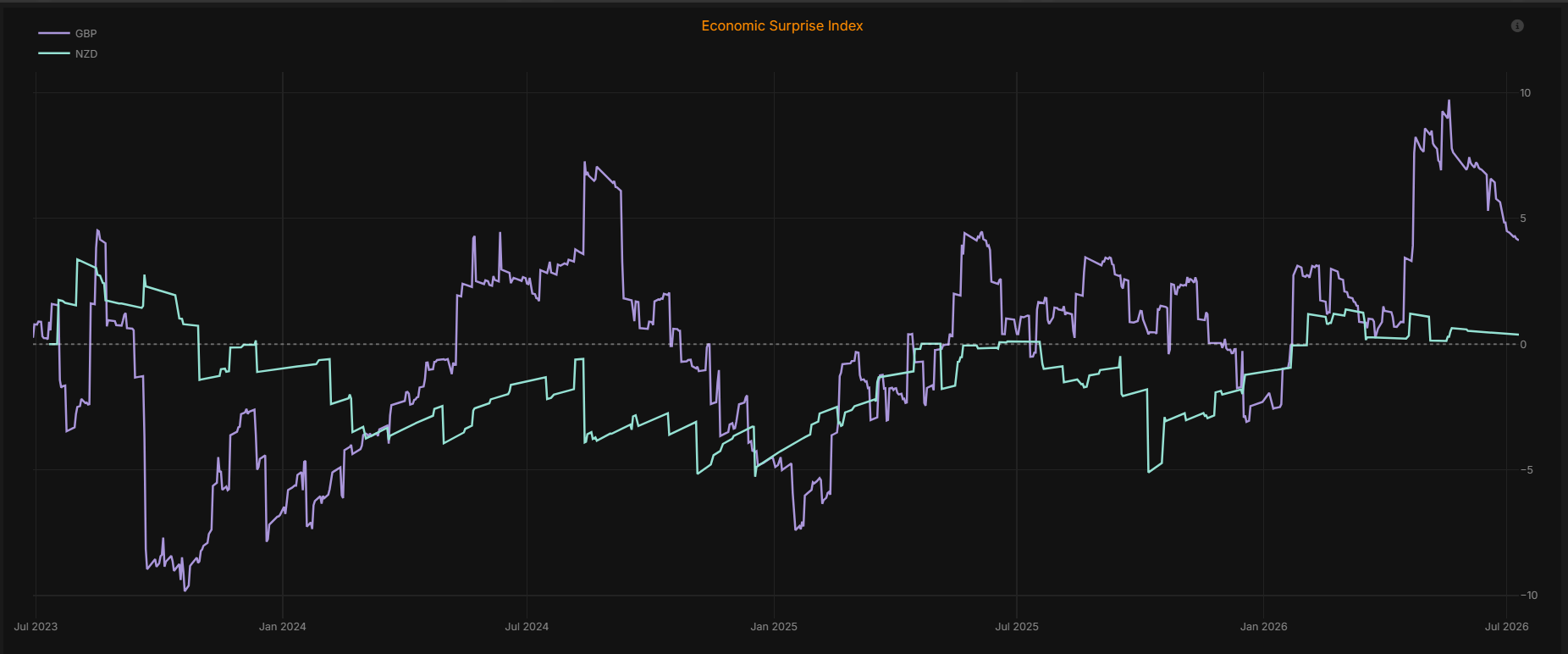
CESI: UK data beating at multi year highs, NZ data flat
The Economic Surprise Index made the divergence visible in one chart. Through June the GBP index spiked toward +9, its highest level in years: UK releases kept beating consensus week after week. The NZD index sat flat around zero over the same window. When one economy consistently surprises to the upside while the other merely meets expectations, the pair tends to reprice in favour of the surpriser.
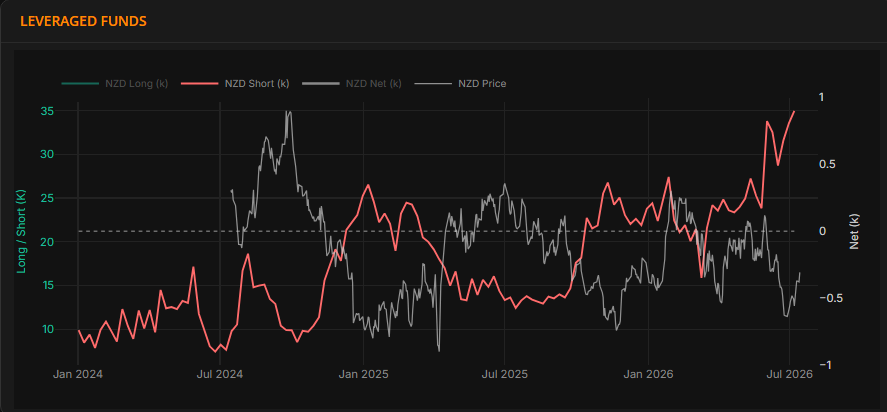
Leveraged funds pressing NZD shorts to a two year extreme
The COT data confirmed that fast money agreed. Leveraged funds NZD shorts climbed steadily through the spring and reached roughly 35k contracts into late June, the highest level on the two and a half year window, driving net positioning deeply negative. Institutions were not fading NZD weakness. They were pressing it.
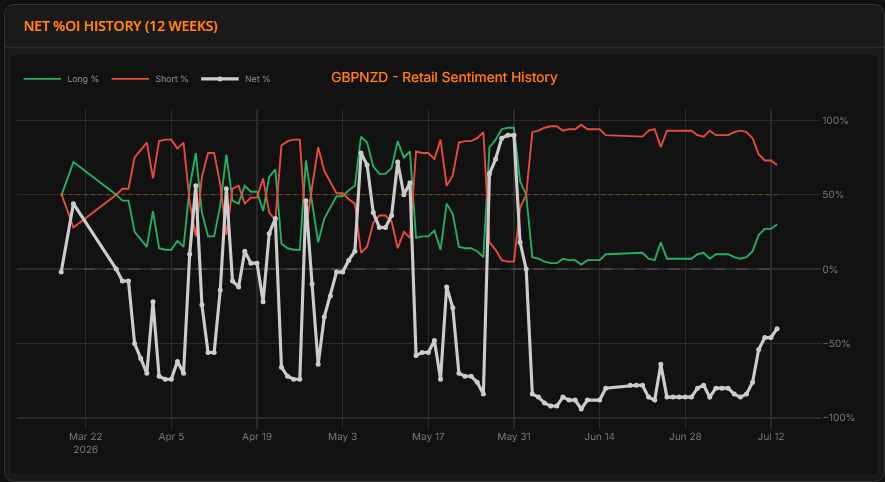
The crowd was 90% short the pair
The contrarian overlay sealed it. From the end of May, retail net positioning on GBPNZD collapsed to around minus 90%: the crowd was massively short, fading the uptrend all the way up. Retail heavily positioned against both the institutional flow and the macro divergence is historically one of the highest quality confirmations the terminal tracks.
Long inside the range, invalidation below it, released by the BoE
The trade: long GBPNZD inside the consolidation, stop under the range low near 2.2920, plan written in the journal before the release. The BoE hold with two hike votes did the rest: the pair broke the 2.3145 high the same week and extended to the 2.33 handle. The position was closed into strength for +4.2R, and the journal entry links back to the CESI chart, the COT extreme and the sentiment reading that built the idea.
Build your next trade the same way.
Start free: 7 days, no credit card, cancel anytime.
Start free, 7 days trialThis case study documents a real trade for educational purposes. It is not financial advice and past performance does not guarantee future results. Trading involves significant risk of loss.